
My 2025 Reads
A Cycle Forward Gift Guide?

“Do any human beings ever realize life while they live it?” This line from Thornton Wilder’s 1938 hit Our Town has been in my head for a few months now. It also has me thinking about the movie Harold and Maude, when Maude proclaims “L-I-V-E … LIVE!” If only Our Town’s Emily could have known sooner what Maude had known all along.
So, friends, remember to “L-I-V-E … LIVE” through good times and bad, and allow yourself the time to be transported to other places through books, movies, music, and whatever shows you’re currently binging.
Here are my 2025 reads. Some I’m not finished with yet, but I thought I would share now in the event that you’re looking for holiday gift ideas! I’ve marked the ones that I think would make for nice gifts with an asterisk (*).
Books about Trails, Nature, and Place:
*Proudly Made, by Tataboline Enos
Ta Enos directs the PA Wilds Center and earlier this year published a memoir (both hers and a memoir of sorts for the region). I was totally immersed by this telling of Pennsylvania’s largest Conservation Landscape initiative and took inspiration for other projects. If you have your eyes set on rural prosperity, Proudly Made is an essential read. Also, I don’t think I’ve ever read a book where I knew so many of the people named within. It was fun to see them recognized for their efforts! Learn more about Ta, the book, and the PA Wilds initiative in this Pennsylvania Environmental Council podcast interview.
*Youghiogheny: Appalachian River, by Tim Palmer
I’m currently about two-thirds of the way through the 2023 revised edition of this classic book. I’m quite enjoying it, though it’s kind of trippy reading a book published in 1984 before the Great Allegheny Passage came to follow much of the Youghiogheny. This book follows the Yough from its headwaters near the Maryland/West Virginia border to its mouth in McKeesport, PA. Palmer dedicates several chapters to Ohiopyle, including the formation of the state park and the emergence of whitewater sports. Palmer offers a fascinating look into early tensions between local residents and whitewater enthusiasts. It’s like a snapshot in time for those of us whose work relates to the outdoor economy. I can’t wait to read the 2023 epilogue to learn what he has to say about the river nearly 40 years later.
Appalachian Winter, by Marcia Bonta
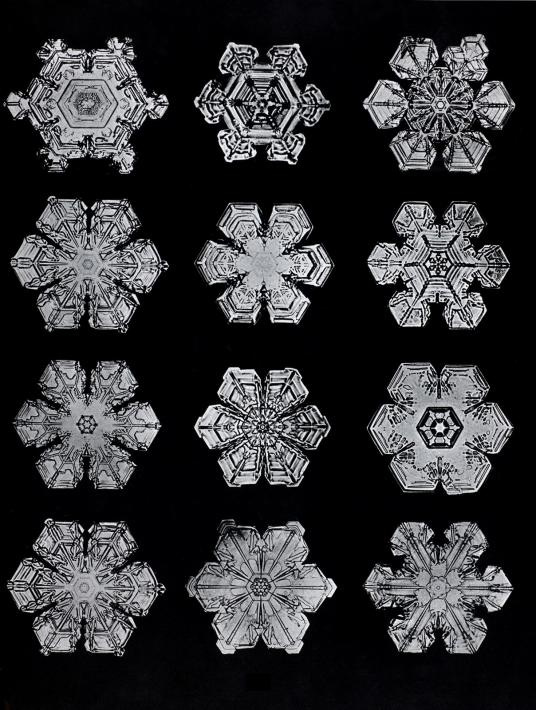
Among naturalist Marcia Bonta’s many works is Appalachian Winter. It’s part of a series of four books (the others being dedicated to spring, summer, and fall). This was a slow read, but I was impressed nonetheless by her deep knowledge of flora and fauna, her observational skills, and her ability to sit out in the cold and wait for the wildlife to appear. The book takes place almost entirely on her land in west-central Pennsylvania in winter 2001. I thought many times in reading this what an important and detailed record it provides of seasonal changes. One of my favorite parts was her writing about W.A. Bentley, who dedicated much of his career to photographing snowflakes. Here’s a Bentley quote that Bonta included in the book:
“Some folks call me crazy. They want to know what good it does to get all those pictures of just snow…I think I see as much around here to enjoy, right here on my farm, as those who call me a fool. Most of them have never seen a darned thing.”
The Johnstown Flood, by David McCullough
You might know David McCullough for bestsellers like John Adams and 1776, but did you know that his first published book was about the 1889 Johnstown Flood? This was a book from my father-in-law’s collection. I decided to give it a go, not knowing whether the 1968 book would hold my interest. As it turns out, I do indeed share the reading interests of senior men. The book was informative, interesting, and of course sad. I learned a lot about this devasting (and preventable) event, and it just so happened to be well timed. The Path of the Flood Trail, which follows the route of the flood, was named the Pennsylvania Trail of the Year for 2025.
Graceland, At Last, by Margaret Renkl
I remember savoring Renkyl’s Late Migrations a few years ago, so I was excited to read Graceland, At Last. Subtitled “Notes on Hope and Heartache From the American South,” the book pulls from her New York Times column, offering yet another snapshot in time. Published in 2021, the collection includes a number of essays that now read like history. It’s divided into six sections: Flora & Fauna, Politics & Religion, Social Justice, Environment, Family & Community, and Arts & Culture. Make no mistake: this is a deep exploration of place. From one of my favorite essays, “What Is a Southern Writer, Anyway?”:
“What if being a Southern writer has nothing to do with rural tropes or lyrical prose or a lush landscape or humid heat so thick it’s hard to breathe? What if being a Southern writer is foremost a matter of growing up in a deeply troubled place and yet finding it somehow impossible to leave? Of seeing clearly the failings of home and nevertheless refusing to flee?”
Renkyl’s writing is both sparce and lyrical. Right-leaning friends might not appreciate the political columns, but much of this collection can be enjoyed by all of us.
*The Serviceberry, by Robin Wall Kimmerer
This sweet little book continues the lessons of Braiding Sweetgrass through a single plant, the serviceberry. If you want more on gratitude, reciprocity, and the gift economy (or if you can’t quite commit to the heftier Braiding Sweetgrass) this book may be just what you’re looking for…or looking to gift. I’m about a third in, so I can’t offer a full review.
*Island, by Allistair MacLeod
This collection of Allistair MacLeod short stories from 1968-2014 is phenomenal! I wrote to a friend after reading the first story, “The Boat,” and reported that I was only one story in and Allistair MacLeod was already breaking my heart. Most of these stories are set on Cape Breton Island, Nova Scotia, though other parts of the province come into play, as well as Ontario, and one story set in Ohio about Appalachia’s outmigration. This is not a bright and cheery book. But it is quite beautiful, timeless, and (for me) threads a connection that spans place and time. See here for some of my thoughts on the collection back in August.
Everything Else:
The Goldfinch, by Donna Tartt
Whew! 771 pages. I read (and listened to) Tartt’s 2013 Pulitzer Prize-winning novel at the recommendation of Silas Chamberlin. I’m glad I did. I’m also glad that I allowed myself to listen to portions of it while driving and walking. Who knows how long it may have taken otherwise. Like with most novels, I don’t remember a ton about the book anymore, but I really did appreciate Tartt’s writing. For a nearly 800-page book, she crafted these punch, short, impactful sentences. The story kept me engaged all the way through.
*Enchantment, by Katherine May
I first read and wrote about May’s Wintering in 2022 (here you go), so I was excited to read Enchantment. As much as I enjoyed the former, I rated the latter better in my StoryGraph account (4.0 v. 3.75). In Enchantment, May covers topics such as wonder, interconnectedness, play, and attentiveness (“We have to fight for our ability to pay attention. It is not given.”) It’s a meandering exploration organized by the four elements. I especially enjoyed the portions about stars and space, the moon and the tides. Of the moon: “As a child, I would look out of the window on a night-time drive and think the moon was following us.” I have a similar early memory after having been on a family trip to Young’s Frozen Custard in the early 1980s. And of the tides, she writes:
“There are two giant waves travelling endlessly around the earth, and twice a day we see their full volume. We barely sense the scale of what is really happening, because we only ever witness it locally.” She goes on to say that we rarely stop to think of how the tides join us to the entire planet and to the space beyond it. And, of course, I’m suddenly transported to the Bay of Fundy and its highest tides in the world ❤.
Our Town, by Thornton Wilder
I’ve thought for a while that I should read this 1938 classic (or watch it, being that it’s a play). Instead, I took the audio route and then spent some time with my printed copy. Set beginning in 1901 in small town New Hampshire, Our Town isn’t what I thought it would be. I expected a story about a community…a story about Main Street. And those elements are there, but this is a story about the human condition, about love and loss, and how hard it can sometimes feel to appreciate life in real time.
Tom Lake, by Ann Patchett
Our Town was my homework assignment ahead of reading Tom Lake, a novel set early in the pandemic on a Michigan cherry orchard. The narrator recounts for her grown daughters the story of her time performing in a summer theater production of Our Town. The book was good, not great. I adore Patchett’s writing, having enjoyed others more. I learned partway through that Meryl Streep performs the audio version. Seeing as I would listen to Streep read from a phone book, as the saying goes, it was a good move. She brought the story to life with her performance. She was so good and, therefore, the story kept me captivated. And being familiar with Our Town added to my enjoyment of the book.
*The Art of Gathering, by Priya Parker
I’ve read this book before and wanted to revisit it via audio. It kept my attention just as much this go-round. Parker expertly writes about how to gather well, incorporating examples from both personal and professional events and gatherings. It’s a good, useful book that has influenced how I bring people together.
2024 Reads I’m Still Thinking About
*Homing, by Sherrie Flick
Our Missing Hearts, by Celeste Ng
Fall on Your Knees, by Ann-Marie MacDonald
All so good! Here’s my post about my 2024 year in reading if you want to learn any more about these ones.
“As it turns out, I do indeed share the reading interests of senior men.” 😆
Anyway, great list. I always appreciate the time you take to reflect on what you’ve read. That’s something I aspire to do more!